This article was updated in December 2025 to reflect the latest information and best practices.
TL;DR
The employee lifecycle describes every stage an employee goes through - from first contact with your employer brand to their final day.
Managing each stage with intention helps HR improve engagement, productivity, retention, and long-term workforce planning.
This guide explains:
- The employee lifecycle stages
- Key employee transitions within those stages
- How HR teams can manage the lifecycle more effectively at scale
Table of Contents
- What is the employee lifecycle?
- Employee lifecycle vs employee journey
- The employee lifecycle stages explained
- Why employee lifecycle management matters
- FAQ: Employee lifecycle
- Next steps: How employee lifecycle management software supports HR
What is the Employee Lifecycle?
The employee lifecycle refers to the full sequence of stages an employee moves through during their time with an organisation, from attraction and recruitment to exit.
Each stage shapes how employees experience your organization.
Together, they determine whether people stay engaged, perform well, grow internally, or leave earlier than expected.
Employee Lifecycle vs Employee Journey
These terms are often used interchangeably, but they serve different purposes.
- Employee Lifecycle
A structured, stage-based model HR uses to design, manage, and improve workforce processes. - Employee Journey
The individual, lived experience as an employee while moving through those stages.
In short:
The lifecycle is the framework.
The journey is how it feels to move through it.
The Employee Lifecycle Stages Explained
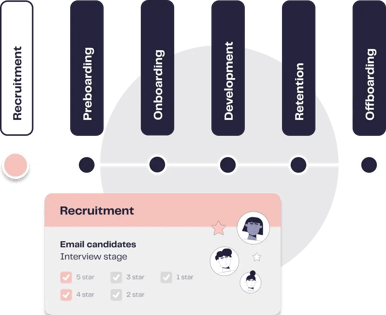 1. Attracting and Recruiting Talent
The employee lifecycle begins long before someone applies for a role.
This stage focuses on:
- Employer branding
- Reputation and culture
- Reaching and engaging the right candidates
A strong internal culture shapes external perception. If employees have poor experiences, that reputation reaches candidates quickly, undermining recruitment efforts before they begin.
During recruitment itself, HR must balance:
- Speed and efficiency
- Fair, unbiased assessment
- A positive candidate experience
Clear processes, inclusive hiring practices, and consistent communication all contribute to better outcomes at this stage.
|
RESOURCE ALERT Our recruitment strategy guide explains how to build a recruitment strategy that aligns employer branding, candidate experience, and long-term workforce needs. |
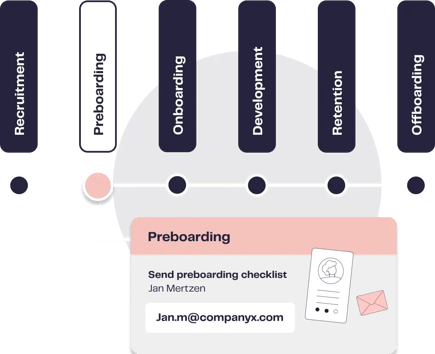
2. Preboarding
Preboarding starts once a candidate accepts an offer and continues until their first day.
Its purpose is to:
- Reduce first-day uncertainty
- Build early connection and confidence
- Prepare new hires to be productive sooner
Effective preboarding often includes:
- Completing paperwork before day one
- Sharing practical information about the role and team
- Introducing key contacts and expectations
Handled well, preboarding sets the tone for everything that follows.
|
RESOURCE ALERT Our preboarding guide explains what preboarding is, why it matters, and how HR teams can reduce first-day uncertainty and improve early engagement. |
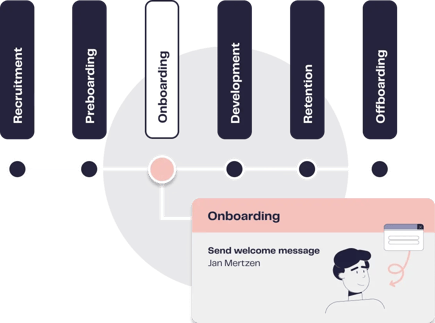
3. Onboarding and Orientation
Onboarding is the structured process of helping new hires adjust to both the social and performance aspects of their role.
It typically spans:
- Preboarding activities
- First-day orientation
- Training, integration, and ongoing support
Good onboarding:
- Shortens time to productivity
- Improves engagement
- Reduces early attrition
Rather than being a one-off event, onboarding works best as a phased process that continues until employees feel confident and fully integrated.
|
RESOURCE ALERT For a practical view of how onboarding unfolds over time, check out the Talentech Ultimate Employee Onboarding Timeline. |
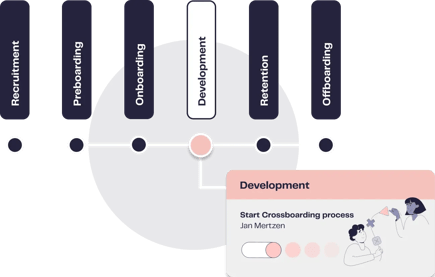
4. Development and Internal Mobility
Once employees are settled, the lifecycle shifts toward growth and movement.
This stage includes:
- Ongoing development and performance management
- Internal role changes and career progression
- Supporting employees through transitions
Two key transitions matter here:
Crossboarding
When an employee moves into a new role or team internally.
Structured crossboarding helps transfer knowledge, reduce disruption, and accelerate productivity in the new role.
Want to know more? Check out our handy crossboarding explainer blog.
Reboarding
When employees return after an extended absence (such as parental leave or long-term illness).
Reboarding helps them reconnect with systems, projects, and people, without treating them like brand-new hires.
Supporting internal transitions signals long-term commitment and reduces avoidable turnover.
|
RESOURCE ALERT Our employee development explainer blog explores how structured learning and growth opportunities support long-term performance, engagement, and retention. |
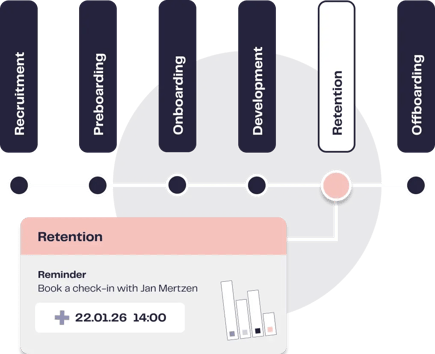
5. Retention and Engagement
This stage is not so much a moment in time but a floating, always-on activity. Why? Because retention is not a single initiative; it’s the outcome of everything that comes before it.
To promote better retention and engagement, HR should focus on:
- Motivation and purpose
- Clear communication
- Regular feedback and assessment
Employees are more likely to stay when they:
- Understand how their work contributes
- Feel heard and supported
- See realistic development opportunities
Ongoing, two-way dialogue is essential for identifying issues early and maintaining engagement over time.
|
RESOURCE ALERT Explore the 6 key factors that influence long-term employee retention and discover what HR teams can do to address them proactively. |
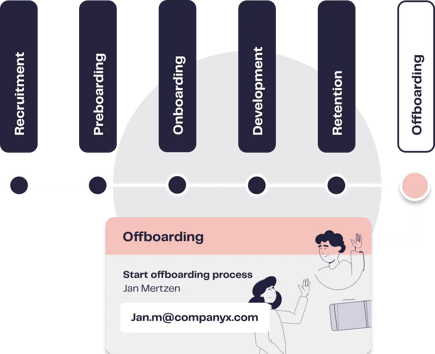
6. Offboarding
Offboarding is the final stage of the employee lifecycle and one of the most overlooked.
A structured offboarding process helps:
- Transfer knowledge
- Protect business continuity
- Preserve employer brand reputation
Effective offboarding includes:
- Clear handovers
- Exit feedback
- Respectful, transparent communication
Handled well, exits provide valuable insight into organisational strengths and weaknesses - and leave the door open for future advocacy or re-employment.
|
RESOURCE ALERT Our offboarding guide walks through the essential steps of a structured offboarding process, helping HR teams manage exits consistently and respectfully. |
Why Employee Lifecycle Management Matters
Managing the employee lifecycle deliberately allows HR to:
- Identify gaps between stages
- Improve consistency across teams and locations
- Support employees through predictable transitions
- Align people strategy with business goals
Without a lifecycle view, organisations tend to optimise individual moments, while missing the bigger picture.
FAQ: Employee Lifecycle
What is the employee lifecycle?
The employee lifecycle describes the stages an employee goes through during their relationship with an organisation, from attraction and recruitment to development, retention, and eventual exit.
What are the stages of the employee lifecycle?
Common employee lifecycle stages include attracting and recruiting talent, preboarding, onboarding, development and internal mobility, retention and engagement, and offboarding.
What is employee lifecycle management?
Employee lifecycle management is the strategic approach HR teams use to design, manage, and improve employee experiences across all lifecycle stages using structured processes and data.
Why is the employee lifecycle important for HR?
Understanding the employee lifecycle helps HR teams improve engagement, support employee transitions, reduce turnover, and align people strategies with business goals.
How does employee lifecycle management software help?
Employee lifecycle management software helps HR teams standardise processes, support onboarding and internal transitions, maintain consistency, and track employee experience across the lifecycle.
Next Steps: How employee lifecycle management software supports HR
As organisations grow, manual lifecycle management becomes difficult to sustain.
Employee lifecycle management software helps HR teams:
- Standardise key processes across stages
- Support onboarding, development, and transitions
- Maintain consistency without losing flexibility
- Connect people data across the employee lifecycle
Talentech’s product ecosystem supports lifecycle management across hiring, onboarding, development, and engagement. Sound good? Book your demo and take us for a spin today!